Brand World · Super-Premium Coffee
ATERRA
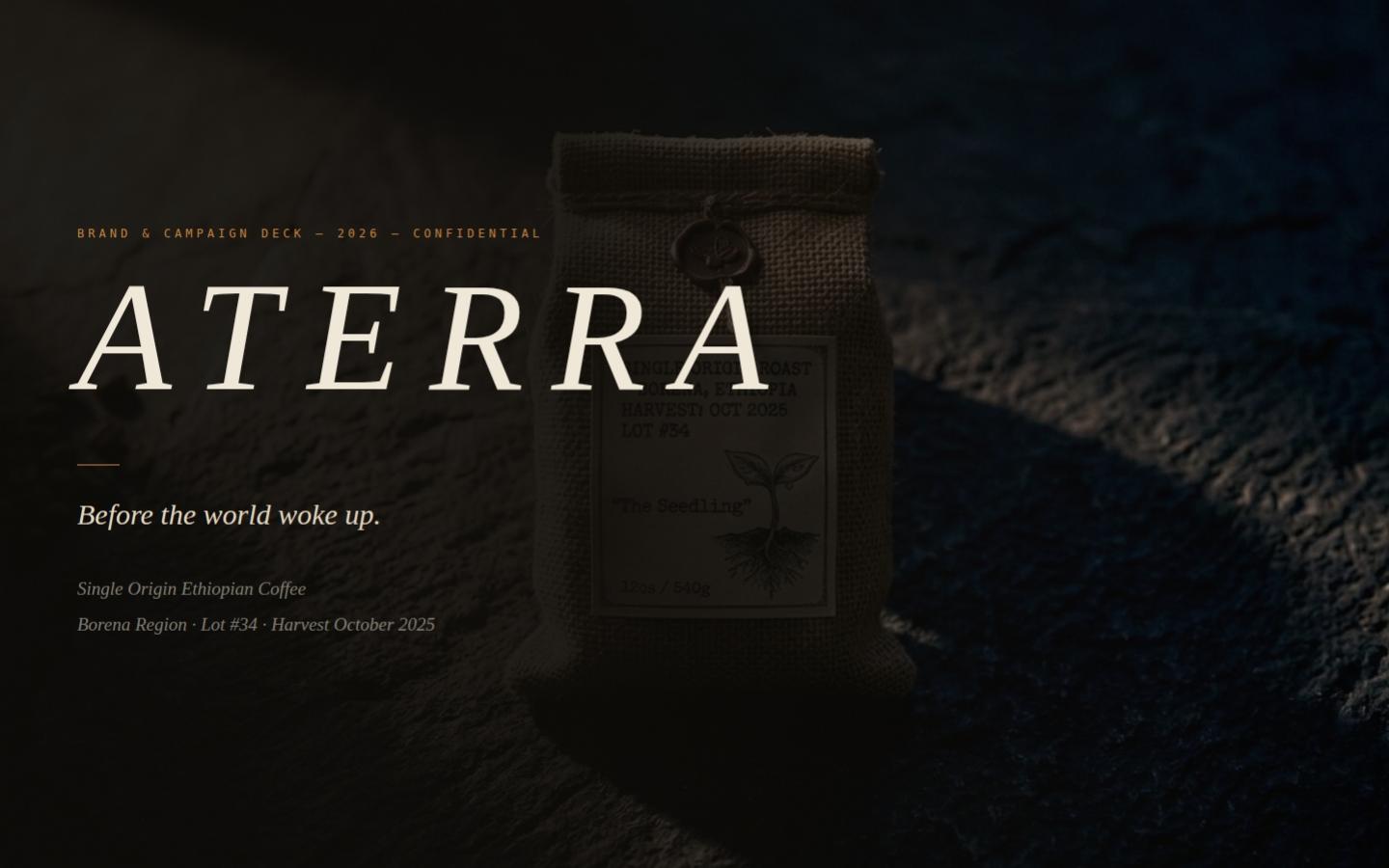
Before the world woke up.
The Problem & The Opportunity
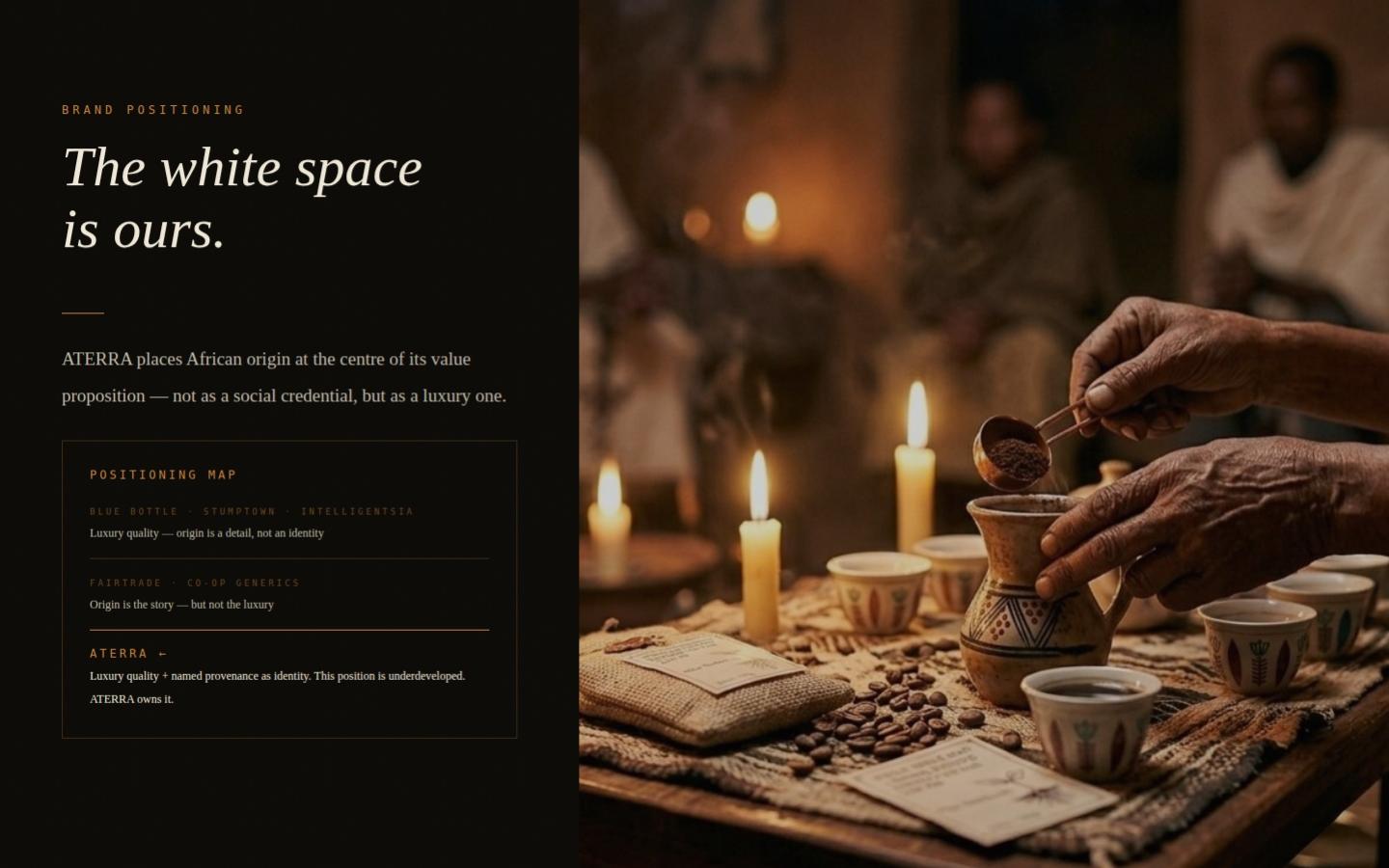
Africa is the birthplace of coffee. Its share of the branded premium market remains marginal — not because the product is inferior, but because the brand infrastructure hasn't matched it. Ethiopia is the genetic origin of Arabica coffee, producing some of the world's most sought-after beans — Yirgacheffe, Sidama, Borena — yet those beans reach consumer markets overwhelmingly sold under brands that carry none of the origin's name, story, or authority.
ATERRA's position: not the first to care about African coffee — the first to build brand architecture that matches the product's actual quality and cultural weight.
The global specialty coffee market is valued at over $83B and growing at 11% annually. The window to establish a definitive premium African-origin coffee brand is open. Early movers define the category.
The positioning
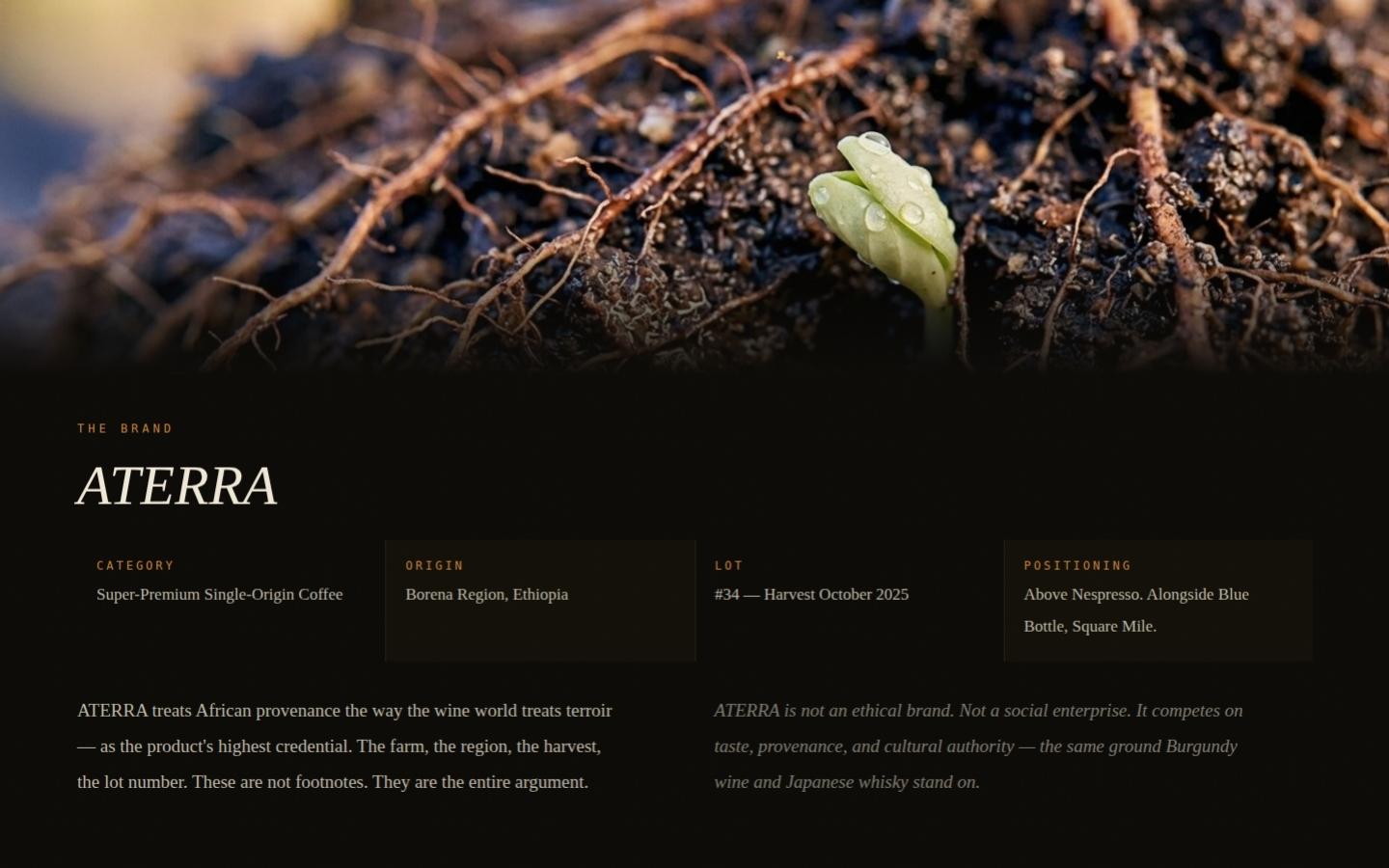
ATERRA treats African provenance the way the wine world treats terroir — as the product's highest credential. The farm, the region, the harvest, the lot number are not footnotes. They are the entire argument. ATERRA is not an ethical brand, not a social enterprise. It competes on taste, provenance, and cultural authority — the same ground Burgundy wine and Japanese whisky stand on.
Category: Super-Premium Single-Origin Coffee. Origin: Borena Region, Ethiopia. Lot #34, Harvest October 2025. Positioning: above Nespresso, alongside Blue Bottle and Square Mile.
The audience
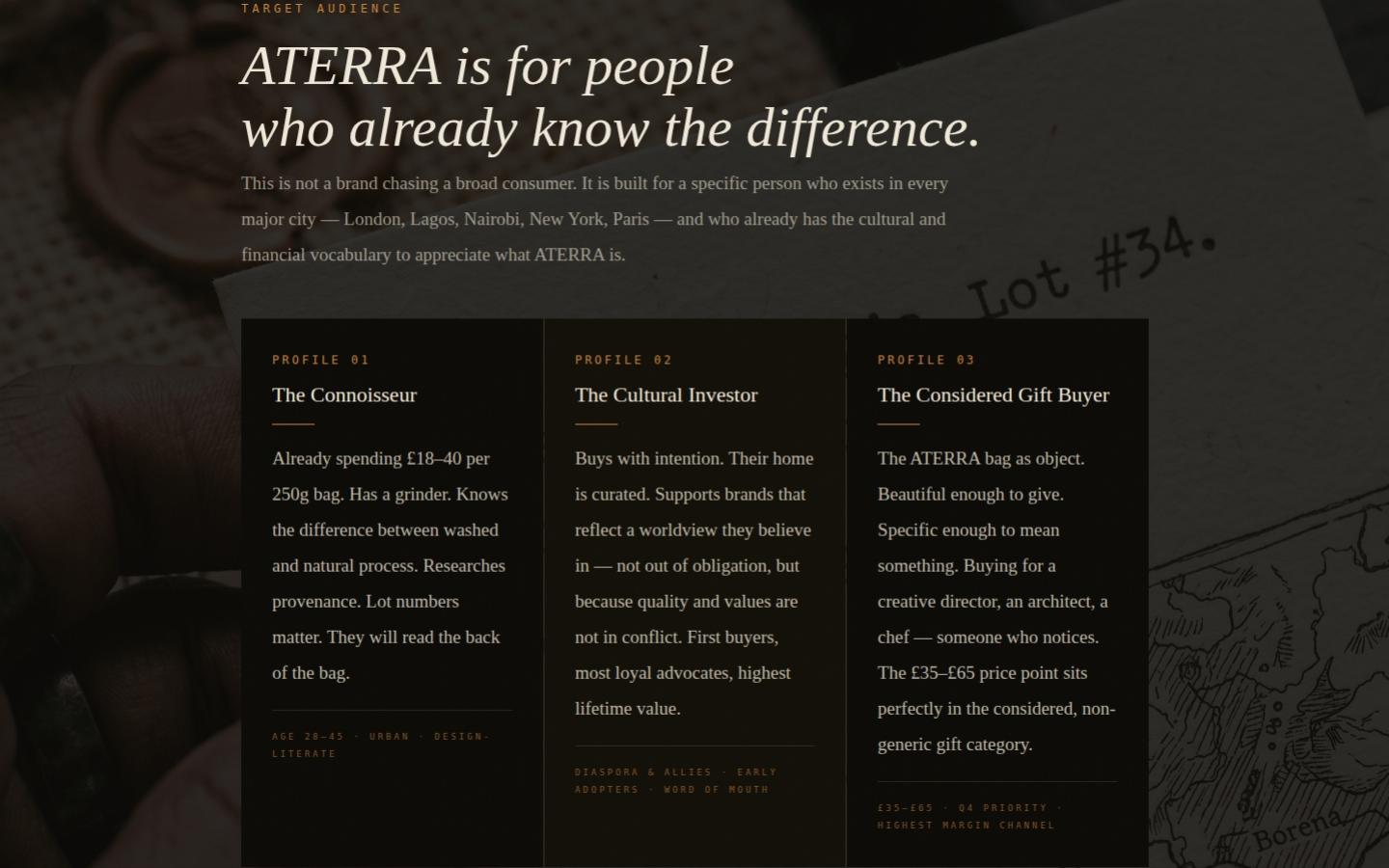
ATERRA is for people who already know the difference — a specific person who exists in every major city: London, Lagos, Nairobi, New York, Paris. Three profiles: The Connoisseur (already spending £18–40 per 250g bag, knows lot numbers matter), The Cultural Investor (buys with intention, first buyers and most loyal advocates), and The Considered Gift Buyer (the £35–65 gift category, highest margin channel).
The campaign
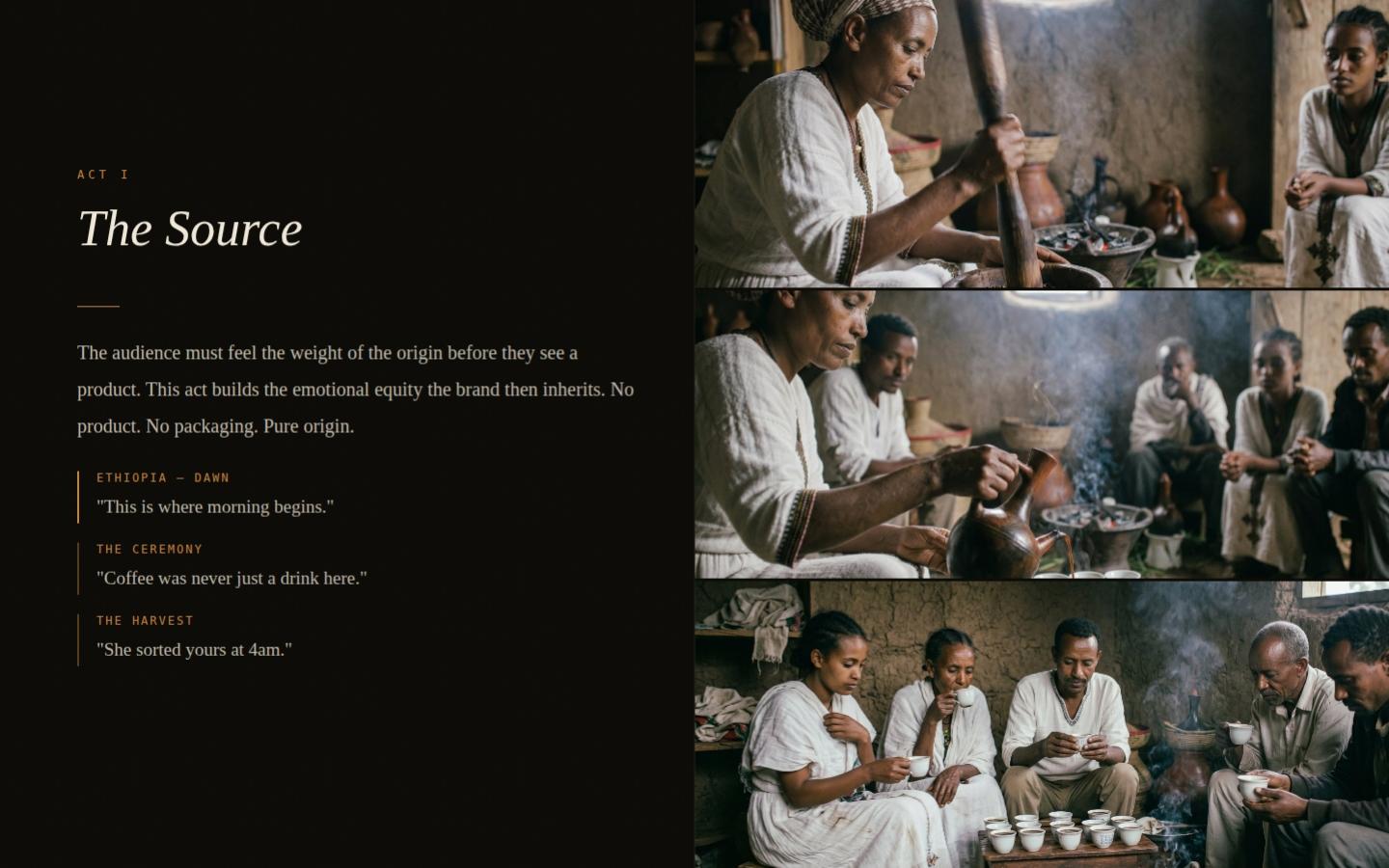
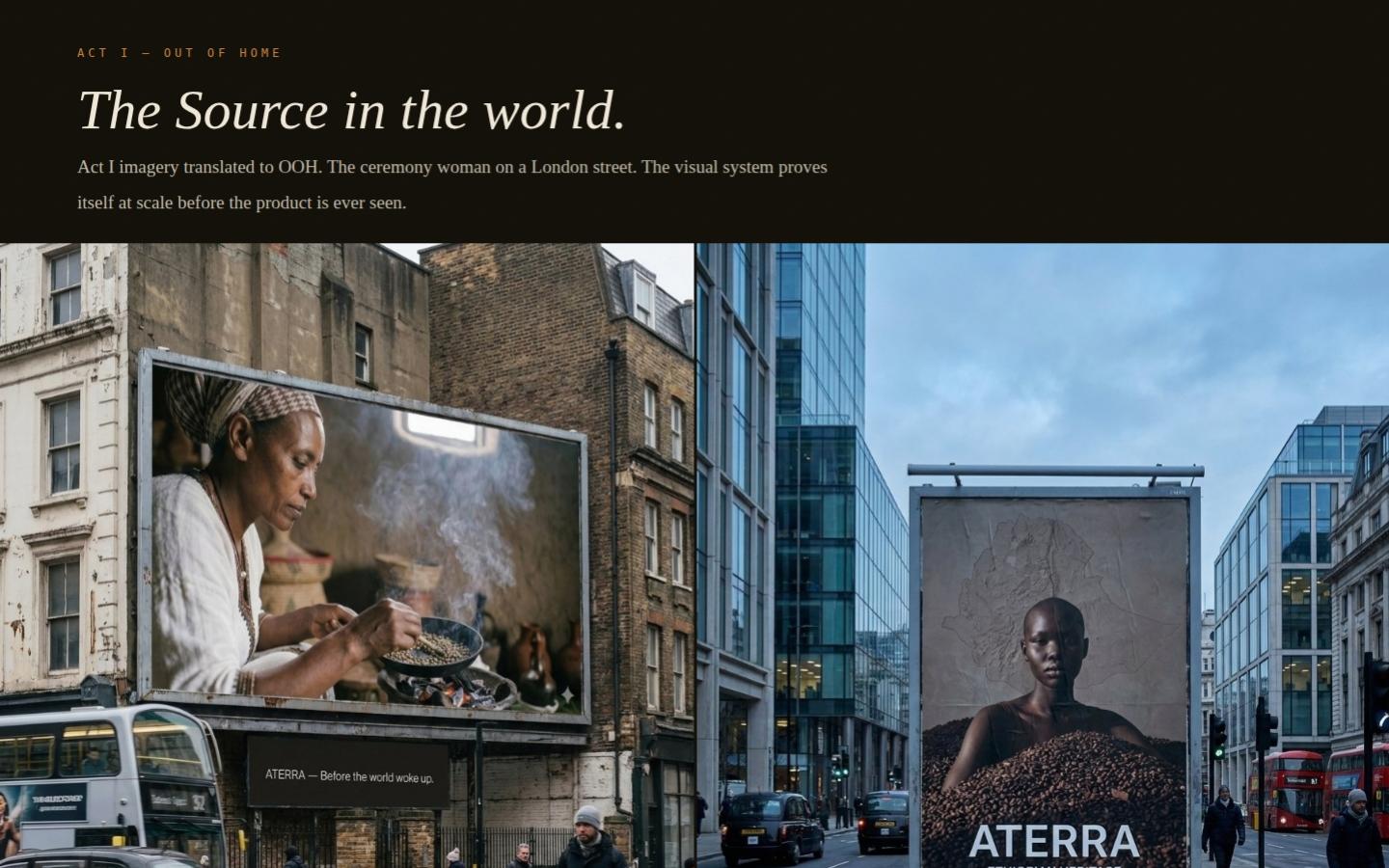
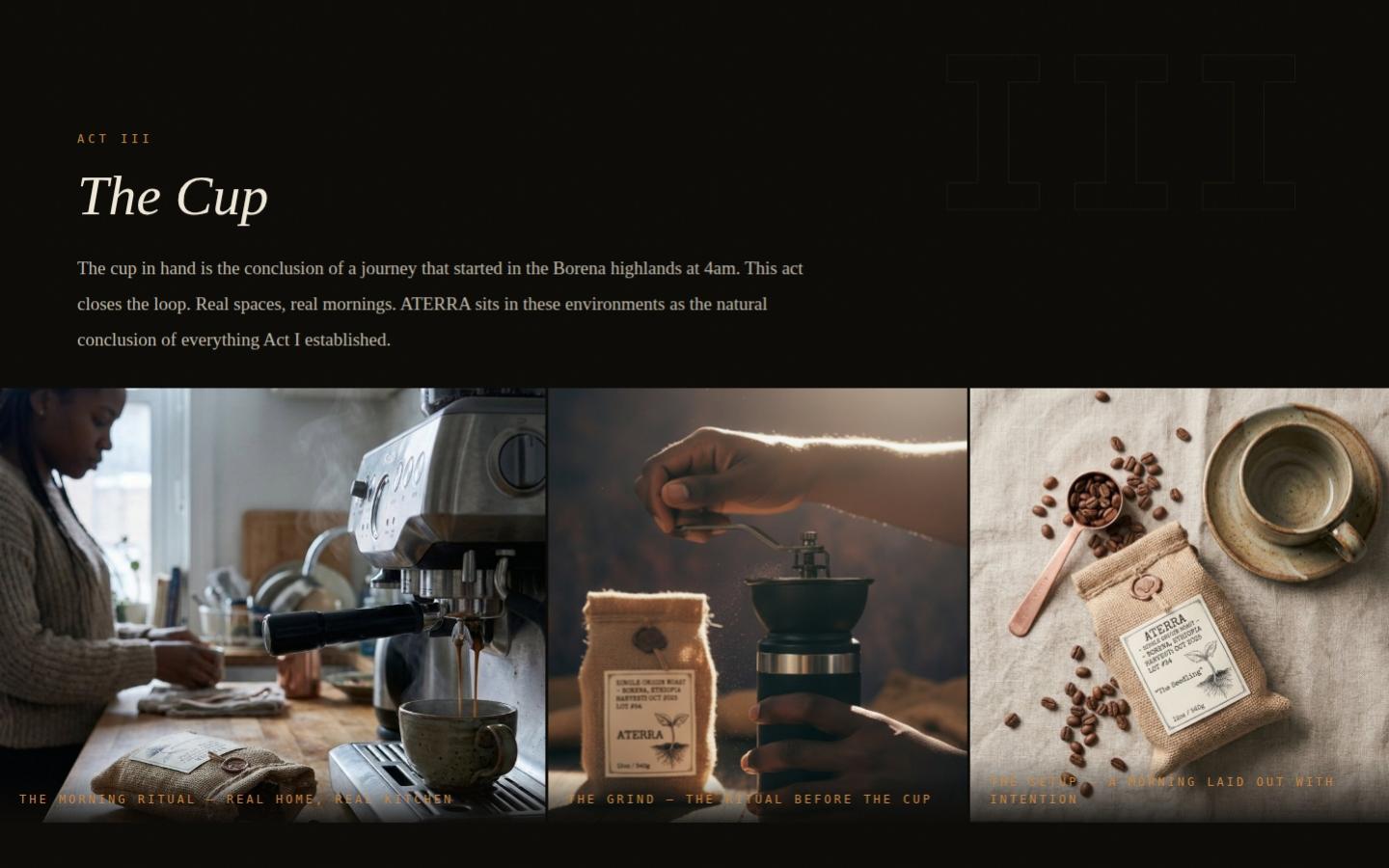
"Before the world woke up" — the campaign creates a felt connection between origin and cup through atmosphere, not information. Three acts mirror the product journey: The Source (Ethiopia, the farm, the ceremony — emotional equity before any product appears), The Journey (the product as the physical record of Act I, packaging as document of origin), and The Cup (real homes, real mornings, ATERRA as the natural conclusion).
The product as document
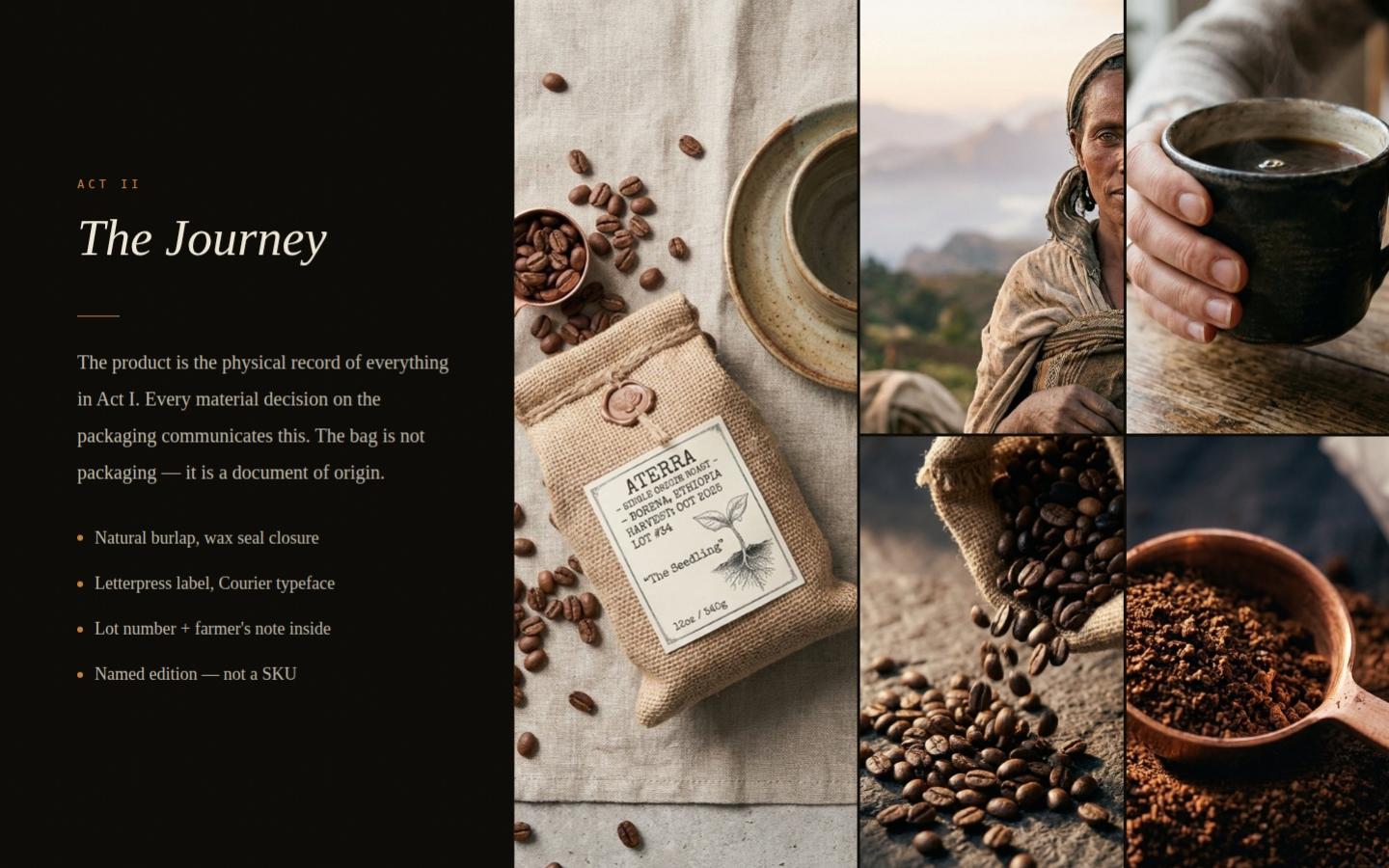
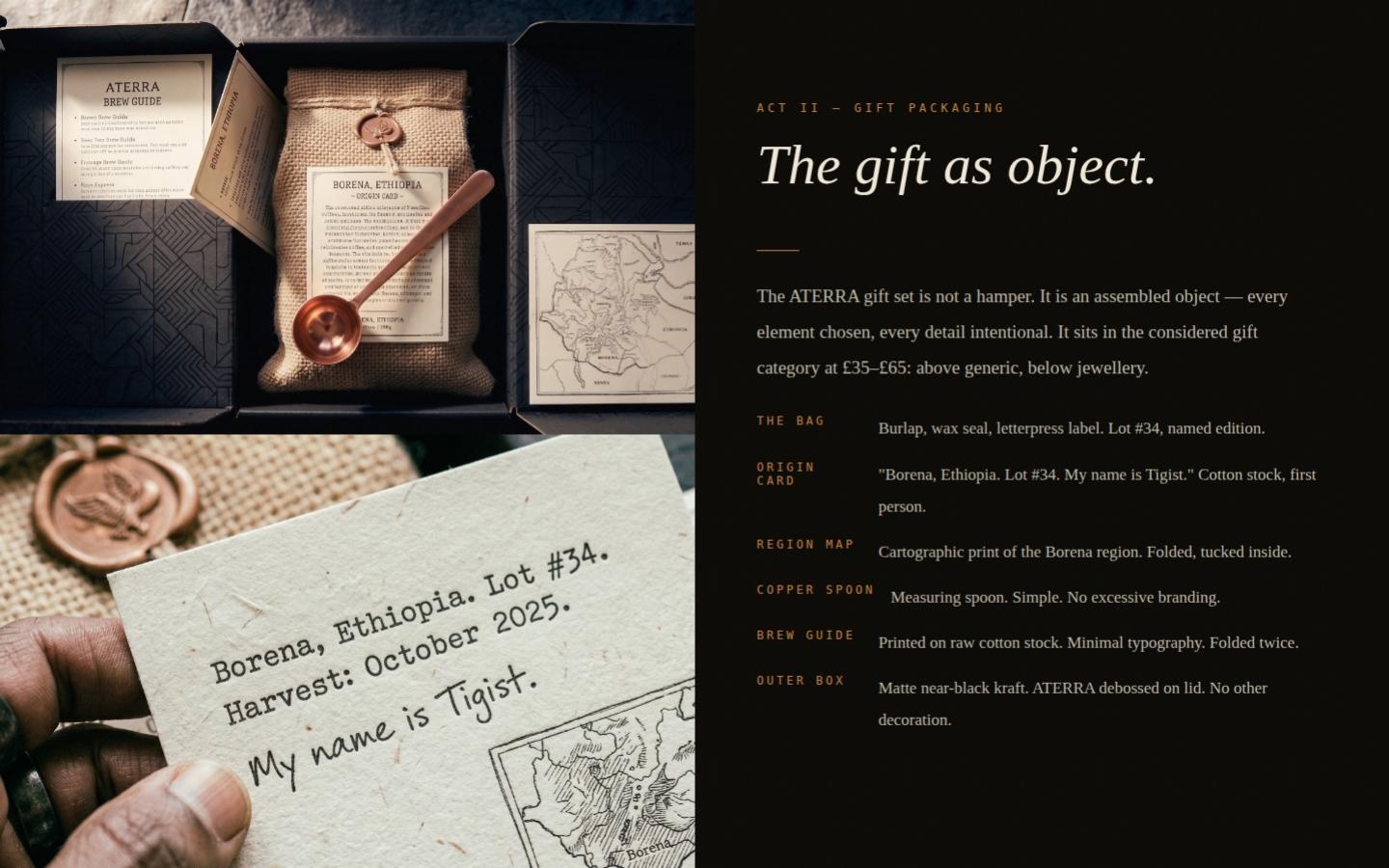
Every material decision on the packaging communicates origin. Natural burlap, wax seal closure. Letterpress label, Courier typeface. Lot number and farmer's note inside. Named edition, not a SKU. The gift set sits in the £35–65 considered gift category: origin card in the farmer's own words, region map, copper spoon, brew guide on raw cotton stock, matte near-black outer box debossed with ATERRA — no other decoration.
Route to market
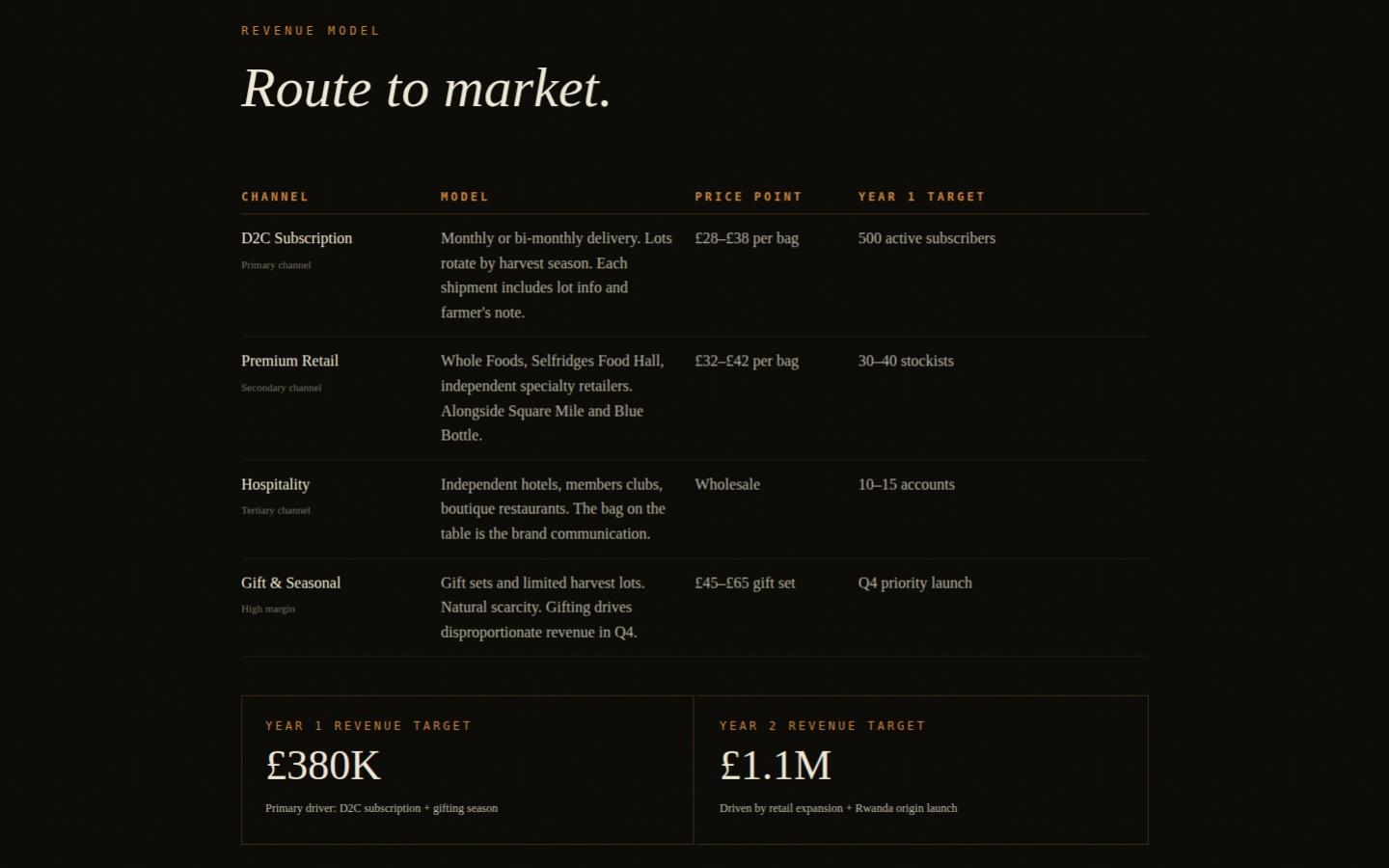
D2C subscription as primary channel (£28–38 per bag, 500 active subscribers target), premium retail through Whole Foods and Selfridges Food Hall (£32–42 per bag, 30–40 stockists), hospitality wholesale (10–15 accounts), and gift & seasonal as the high-margin Q4 priority (£45–65 gift set). Year 1 revenue target: £380K. Year 2: £1.1M, driven by retail expansion and a second origin launch in Rwanda.
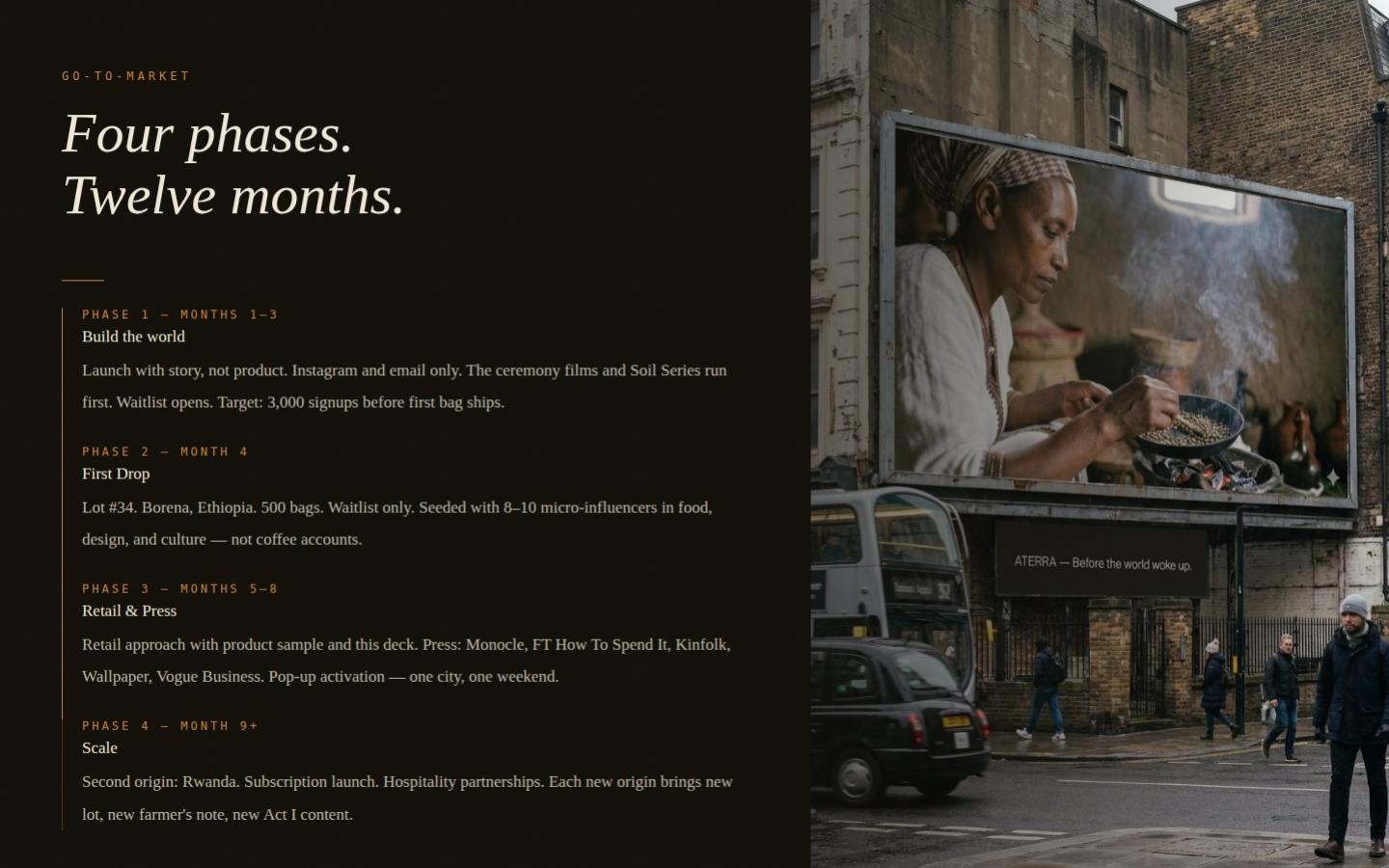
Go-to-market across four phases over twelve months: build the world with story-first content and a 3,000-signup waitlist before the first bag ships; first drop of Lot #34 seeded with 8–10 micro-influencers in food, design and culture; retail and press outreach to Monocle, FT How To Spend It, Kinfolk, Wallpaper, and Vogue Business; then scale with a second origin and hospitality partnerships.
"The ceremony existed before the espresso bar. The origin existed before the brand. ATERRA is just the record becoming visible."